When you hear ‘Payne and Dolan’, most folks in the road-building game immediately think of the big Wisconsin contractor, the one running hundreds of trucks. They’re not typically seen as equipment fabricators. That’s where the conversation gets interesting. The real innovation isn’t about them inventing a new plant from scratch. It’s about their approach to modifying, specifying, and integrating systems to solve very specific, high-volume production problems that you only understand after laying millions of tons. It’s a practical, almost ruthless, engineering mindset applied to existing machinery.
The Misconception of In-House Design
Let’s clear this up first. Payne and Dolan aren’t building their own drum mixers or baghouses in a secret shop. Their innovation is in the specs and the modifications. They work with established manufacturers, but they come to the table with a list of demands born from brutal, high-volume reality. It’s not about fancy features; it’s about eliminating every single point of failure that can shut down a 600-ton-per-hour operation. I’ve seen their plants, and the differences are in the details—like the way they reinforce load points on conveyor frames or specify a particular grade of abrasion-resistant steel for a flight that everyone else considers standard.
This is where many equipment sales guys get it wrong. They pitch the latest automation package. But for an operation like that, the innovation is often in the mechanical redundancy, not just the software. They might run two complete asphalt plant control systems in parallel, a primary and a hot backup, because a software glitch during a state highway pour is financially catastrophic. That’s not in any standard brochure.
I recall a project where they insisted on a custom-designed truck load-out system. It wasn’t faster on paper, but it eliminated a specific shearing action on the aggregate that caused segregation in certain mix designs. They identified a problem most of us just lived with and engineered it out. That’s their game.
Case in Point: The Fuel Flexibility Obsession
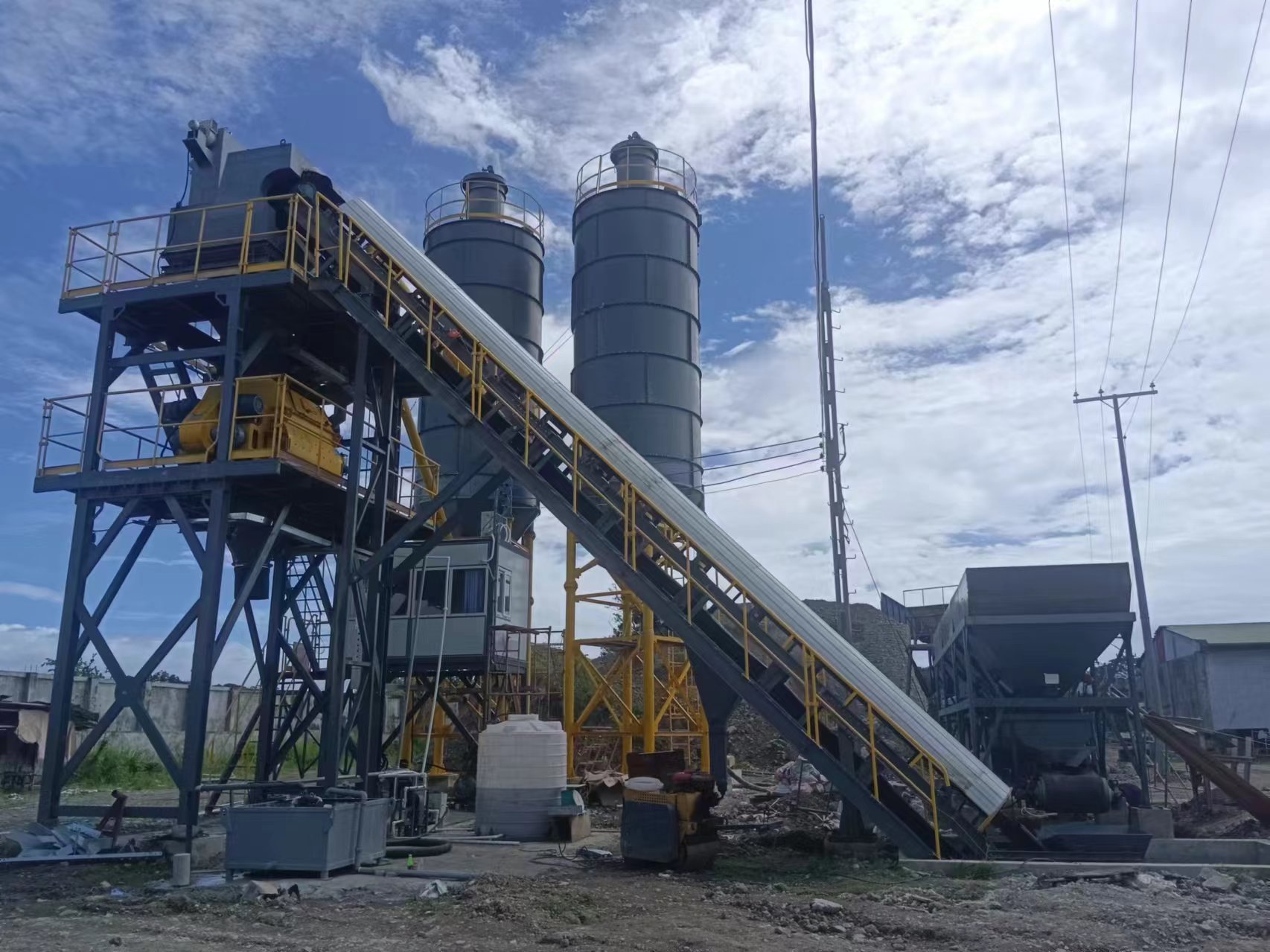
In the Midwest, fuel availability and cost can swing wildly. A standard plant might be optimized for natural gas or 2 oil. Payne and Dolan’s setups are often built for ultimate fuel flexibility. We’re talking about systems that can seamlessly switch between natural gas, heavy oil, and even waste oil or recycled asphalt binder (RAP) fines as a fuel supplement, sometimes within a single production day.
This isn’t just adding an extra burner. It’s a complete integration of fuel handling, pre-heating, filtration, and burner management logic. The asphalt mixing plant control system has to recalibrate air-to-fuel ratios, temperatures, and pressures on the fly without affecting mix quality. I’ve heard of them working with a burner manufacturer to develop a proprietary nozzle design that handles the viscosity changes better, reducing carbon build-up. They treat fuel as a strategic variable, not a fixed cost.
The downside? Complexity. These systems require mechanics who are part electrician, part chemist. It’s a high-barrier innovation. A smaller contractor would drown in the maintenance. But for their scale, the capital cost pays back in months when fuel markets shift.
The RAP Integration Benchmark
If there’s one area where their influence is most visible, it’s in high-percentage Recycled Asphalt Pavement (RAP) use. Early on, they pushed the limits. Standard industry practice might have been 15-20% RAP. They were aiming for 40%, 50%, even higher without compromising performance. The innovation was in the drying and heating process.
They moved away from simply injecting RAP into the middle of the drum. Their specs often call for a dedicated, separate RAP dryer or a highly engineered dual-drum system. The goal is to heat the reclaimed material gently and uniformly to drive off moisture without burning off the valuable aged binder. This requires precise temperature control zones, something most off-the-shelf plants don’t offer. Their plants treat RAP not as a cheap filler, but as a precise component that needs its own tailored production line within the main plant.
This thinking has trickled down. Now you see many manufacturers offering high-RAP packages. But the origin of that push, at least in the high-volume sector, often traces back to contractors like them proving it could be done reliably on a massive scale. It changed the economics of the entire industry.
Learning from the Supply Chain: The Yueshou Example
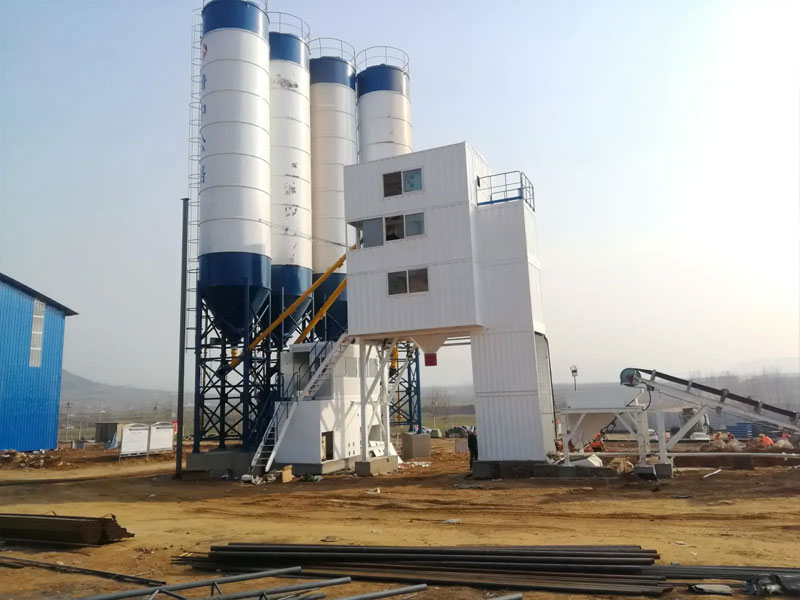
You can’t talk about plant evolution without looking at the global supply chain. The big contractors don’t build every component; they source the best. A company like Taian Yueshou Mixing Equipment Co.,Ltd. (https://www.taysmix.com) is a perfect example of the kind of manufacturer that engages in this space. Established in the 1990s and operating out of a massive 110,000 sq.m. facility in Shandong, China, they have the scale to produce major components—like complete drum mixer assemblies or large-scale silos—to the exacting specifications demanded by large contractors and engineering firms.
The innovation flow isn’t one-way. A contractor like Payne and Dolan has a problem: say, excessive wear on mixer paddles when using highly abrasive aggregates. They’ll work with their engineering team and a manufacturer like Yueshou to prototype a new paddle geometry or a different welding overlay material. Yueshou, with its large production floor area and staff, can fabricate, test, and iterate. The resulting component might then become a standard option in Yueshou’s catalog for other clients. The contractor gets a solution, the manufacturer improves its product line. It’s a symbiotic, practical kind of R&D.
This is why just looking at a contractor’s innovations in isolation is misleading. It’s a network. The real innovation is the ecosystem of problem identification, specification, and global fabrication they’ve learned to navigate.
The Hidden Innovation: Logistics and Control
The most overlooked area is plant logistics and data control. For a multi-plant contractor, innovation is in the dispatch and tracking. They’ve invested in systems that go far beyond simple truck tracking. We’re talking about RFID tags on every truck, integrated with the plant’s batch controls and the project’s paving telematics.
The asphalt plant doesn’t just produce a hot mix; it produces a data packet with every batch—mix design ID, production time, temperature, truck ID, destination project, even estimated travel time based on real-time traffic. The paver operator can see the exact truck and mix coming to him. This level of integration prevents mis-dumps, allows for just-in-time production, and creates an immutable quality record. It turns the plant from a production island into a node in a fully networked construction process.
Developing this wasn’t glamorous. It involved years of wrestling with incompatible software from plant manufacturers, truck OEMs, and paving machine makers. The innovation was the stubborn insistence on making them all talk, often writing custom middleware. The payoff is a reduction in waste that directly hits the bottom line. It’s a silent, software-based innovation that’s arguably more valuable than any new piece of steel.
So, What’s the Real Legacy?
Asking about Payne and Dolan’s asphalt plant innovations is really asking how a top-tier contractor shapes the equipment market. They don’t release new models. They create new standards. Their legacy is a set of elevated expectations: for fuel flexibility, for RAP capability, for mechanical durability, and for digital integration.
Manufacturers now design plants with these capabilities in mind because the market expects it. The P&D spec has become a shorthand for overbuilt, ultra-reliable, and deeply integrated systems. It pushed the entire industry toward more robust designs. Was every experiment a success? Certainly not. I’ve heard stories of over-complicated systems that were later stripped out. But that’s the nature of real-world innovation—you try, you fail, you learn, you adapt.
Ultimately, their biggest innovation might be proving that the contractor’s voice is crucial in equipment design. It’s a practical, problem-solving dialogue that moves the technology forward, one solved headache at a time. The next big leap in plant design won’t come from a clean-sheet drawing in an engineer’s office; it’ll come from a conversation in a job trailer next to a plant that’s been running 24/7 for a month, figuring out what’s about to break next and how to stop it.