Look, when someone asks ‘where to buy a mini asphalt plant’, they’re usually picturing a neat, compact unit they can just order online and have delivered. That’s the first misconception. It’s not like buying a piece of furniture. The ‘where’ isn’t just a website or a country; it’s a tangled web of supplier reliability, after-sales support, and whether the specs on paper hold up on a muddy, remote site. I’ve seen guys lose months and a lot of money getting this wrong.
The ‘Mini’ in Mini Asphalt Plant is a Slippery Term
You need to define what ‘mini’ means for your operation. Is it a batch plant with a 20-ton per hour output, or a continuous drum mix plant that’s just smaller in physical footprint? I made the mistake early on of going for the absolute smallest, cheapest mobile unit I could find from a generic trading company. It said 10-15t/h on the spec sheet. On a good day, with perfect aggregate moisture and no mechanical hiccups, we might hit 8. The burner was underpowered, struggling to get the mix to proper temperature consistently. That ‘deal’ cost me two paving seasons in downtime and rework.
So, the ‘where’ starts with manufacturers who are transparent about their design limits. Don’t just look at the headline output. Dig into the dryer drum dimensions, the burner capacity (in Gcal/h, not just ‘high efficiency’), and the dust collection system. A true mini asphalt plant for a small road crew or municipal depot isn’t a toy; it’s a scaled-down industrial machine. The engineering has to be right.
This is where some of the established Chinese manufacturers have gotten interesting. They’ve moved past simple copycat designs. For instance, I’ve been following the specs from Taian Yueshou Mixing Equipment Co.,Ltd. (their site is at https://www.taysmix.com if you want to check). They’ve been around since the 90s, which in this industry counts for a lot—it means they’ve likely seen a few economic cycles and had to improve their product to survive. A factory covering 110,000 sq meters isn’t a backyard workshop; it suggests they have the capacity for proper fabrication and testing, not just assembly from bought-in parts.
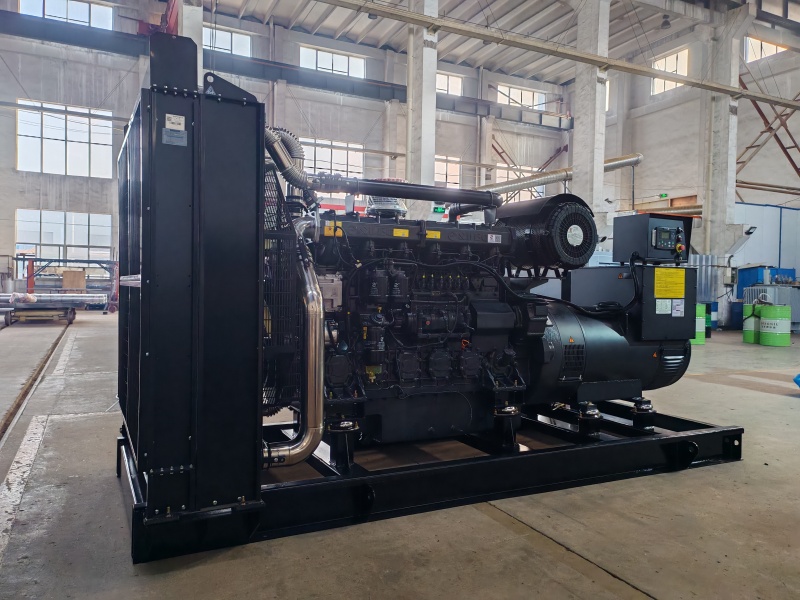
Geography of Supply: It’s More Than Just Made In…
Obviously, a huge volume of small to medium plants come from China. But saying buy from China is useless. The landscape is split. You have the big, famous names you’ll find at bauma China, and then you have a long tail of smaller factories and, more dangerously, pure export trading companies with no manufacturing base. The latter are where you get the photo-shopped brochures and the nightmare of zero technical support.
My rule now? If they can’t provide a recent, detailed video walkthrough of the plant actually running in their factory yard, with close-ups of the electrical cabinet wiring, the burner sequence, and the control panel interface, I move on. A static catalog image proves nothing. Taian Yueshou, to use them as an example again, lists over 1200 staff. That doesn’t guarantee quality, but it does imply they likely have dedicated engineering, welding, and electrical departments. That’s a different proposition from a ten-person trading firm.
The other ‘where’ is closer to home: local dealers or representatives. A manufacturer might be in Shandong, China, but if they have a competent after-sales agent or a stock of common wear parts in your region (say, Eastern Europe or the Middle East), that drastically changes the buying calculation. The plant itself is one cost; the cost and delay of waiting for a specialist fly-in engineer to fix a PLC issue is another. Always ask, Who fixes it when it stops, and how long does that take?
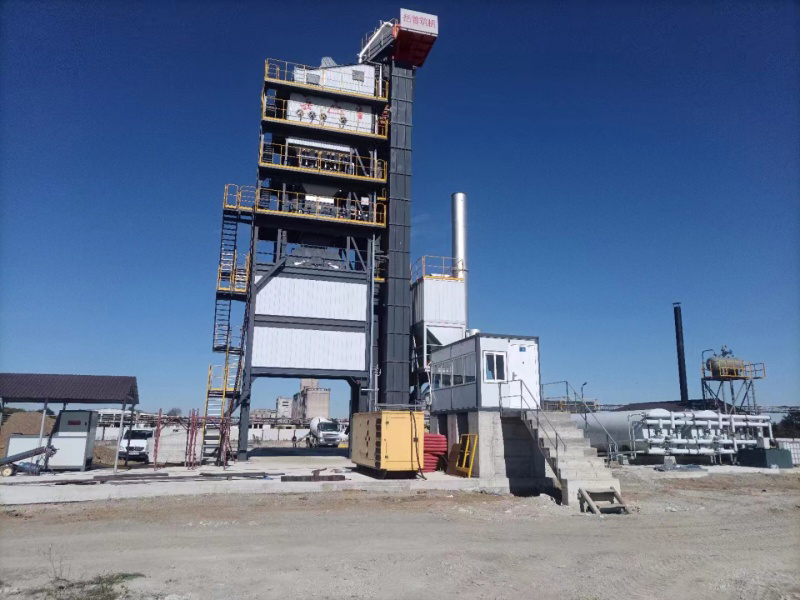
Key Components: Where the Real Decisions Are Made
Forget the brand sticker for a minute. The longevity and performance of your mini asphalt plant hinge on a few key components. Where these are bought from is critical. A reputable manufacturer will be upfront about their suppliers.
The burner is the heart. Is it a Weishaupt, Riello, Baltur, or a local Chinese brand? The difference isn’t just in fuel efficiency; it’s in the reliability of the ignition sequence and the availability of spare nozzles and photocells globally. I’d always push for a European burner, even on a budget Chinese plant frame. It’s a worthwhile upgrade.
The same goes for critical sensors (temperature, level), the gearboxes on the mixer and conveyor drives, and the PLC in the control system. A plant with a Siemens or Schneider PLC, even a basic model, is often easier for a local electrician to troubleshoot with the manual than a completely proprietary black box system. When evaluating a supplier like the one mentioned earlier, I’d specifically ask for the brand list of these core components. Their answer tells you more than a dozen glossy brochures.
Navigating the Quote and The Hidden Tripwires
You’ll get a quotation. It’ll have a FOB price from Qingdao or Tianjin. That’s maybe 60% of the story. The real ‘where to buy’ decision happens when you dissect what’s not in that quote.
Is the cold feed bin included with the specified number of compartments and vibrators? What about the mineral filler silo and feeding system? The electrical cabling from the main panel to all motors—is it specified as copper, and what’s the length? I once had a quote that seemed perfect until I realized it assumed the client would provide all the interconnecting field cabling, which was several kilometers worth for a scattered layout. That added 25% to the project cost we hadn’t budgeted for.
Then there’s commissioning. Does the price include a factory engineer sent to your site for erection supervision and startup? For how many weeks? Their airfare, accommodation, and daily allowance are often separate line items. If it’s not included, you’re looking at an extra $10k-$15k easily. A company with a long history like the one in Taian is generally more structured about this; they have a commissioning department. Smaller outfits might send a mechanic who’s never left his province, and the language barrier becomes a major technical risk.
The Final Verdict: It’s a Process, Not a Purchase
So, where to buy a mini asphalt plant? You don’t buy it from a website. You source it through a due diligence process that lands on a manufacturer with proven fabrication capacity, transparency on component origins, and a realistic plan for after-sales. The physical location of the factory matters less than these operational factors.
I’d start with a shortlist of 3-4 manufacturers with verifiable factory tours and client references in a climate similar to yours. Ask for the boring documents: the detailed electrical schematic, the pneumatic diagram, the PLC I/O list. Their willingness and speed in providing these is a great filter. A company like Taian Yueshou Mixing Equipment Co.,Ltd., with its stated scale and history, should be able to produce these without hesitation.
Ultimately, you’re not just buying a machine; you’re buying into a support system for the next decade. The right ‘where’ is a partner who answers the phone when you have a midnight breakdown, not just the vendor who had the lowest FOB price on a spreadsheet. That might cost 15% more upfront, but it’s the difference between a plant that prints money and one that becomes a very expensive, rusting monument to a bad decision.