When you hear sustainable innovation and concrete batching plant in the same breath, your first thought might be skepticism. Mine was. For years, the industry equated sustainability with expensive add-ons or marketing fluff. But having spent two decades on sites from the Middle East to Southeast Asia, I’ve seen the conversation shift from whether it’s possible to how it’s actually being done—sometimes successfully, sometimes not. The question around Simem isn’t just about their machinery’s specs; it’s whether their approach genuinely redefines resource use on a live project, or if it’s another case of greenwashing wrapped in steel.
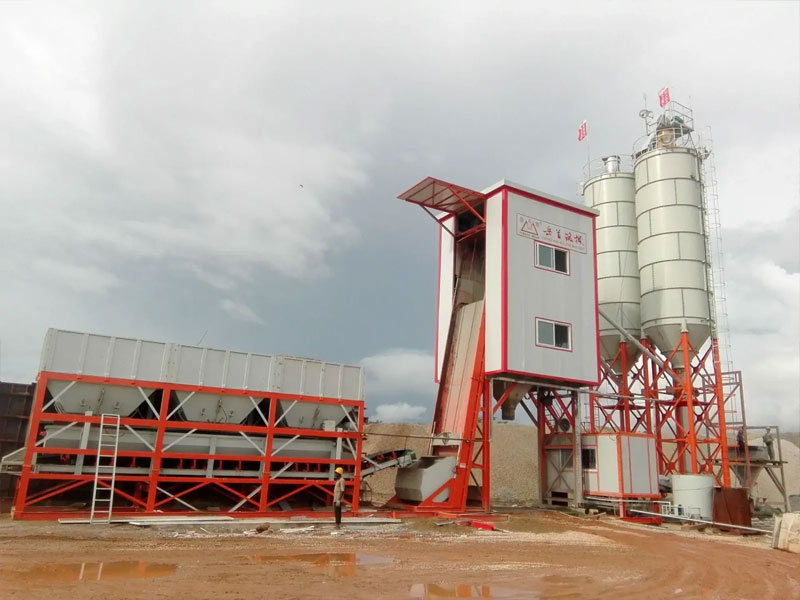
The Real Weight of Sustainable in Concrete Production
Let’s cut through the noise. Sustainability in batching isn’t just about solar panels on the roof. It’s about the granular stuff: aggregate moisture sensors that actually work to reduce water variance, the real-world durability of mixer liners that don’t need swapping every six months, and the control logic that minimizes batch cycle time without spiking fuel consumption. I remember a project in Vietnam where the promised energy-efficient drive system on a competitor’s plant couldn’t handle the local grid fluctuations, leading to more downtime and diesel generator use—net negative. So when evaluating Simem, I look for these operational truths, not brochure claims.
Their focus on concrete batching plant design for reduced material waste is a tangible starting point. Many plants claim precise batching, but the proof is in the surplus pile at day’s end. On a visit to a dam construction site using a Simem setup, the site manager pointed out their aggregate batcher’s load-cell feedback system. It wasn’t revolutionary tech, but its calibration and integration seemed robust, showing consistent 1.5-2% less cement waste per batch compared to the older plant they ran. That’s not huge per load, but over 500 cubic meters a day? That’s real material and cost saving, which is the bedrock of practical sustainability.
This ties into water recycling systems. Almost every major manufacturer offers them now. But the maintenance burden often means they’re turned off. Simem’s closed-loop water system design, from what I’ve observed, tries to simplify the filter cleaning process. It’s not perfect—no system is—but the accessibility of key components suggests they’ve listened to maintenance crews’ complaints. That’s a form of innovation often overlooked: designing for the mechanic, not just the engineer.
Energy Consumption: The Silent Metric
Electricity and fuel burn are the silent budget—and carbon—killers. The innovation here is often incremental. Simem’s move towards higher-efficiency electric motors (meeting IE3/IE4 standards) and variable frequency drives (VFDs) on conveyors and mixers is now industry-standard for top-tier brands. The differentiator? How the plant control system uses them. I’ve seen plants with all the efficient hardware still run conveyors at full tilt for partial loads. Simem’s software logic for eco-mode conveyor speeds based on batch size is smart, but its effectiveness depends entirely on how the operator uses it. On one site, it was ignored; on another, where energy costs were tightly monitored, it shaved about 8% off the plant’s direct energy draw. The tech enables savings, but site culture dictates it.
Then there’s heat. In cold climates, heating aggregates and water is a massive energy sink. Simem’s integration of thermal recovery from the mixer’s hydraulic systems to pre-heat water is a neat trick. It’s not a new concept in industrial engineering, but applying it reliably in the dusty, vibrating environment of a batching plant is the challenge. A contractor in Russia reported that this system worked well for two seasons before heat exchanger clogging became an issue. The lesson? Sustainable features must be over-engineered for harsh conditions, or they become unsustainable maintenance headaches.
The Supply Chain and Manufacturing Footprint
This is where the story gets broader. A plant’s sustainability isn’t just its on-site operation. It’s embedded in how and where it’s built. This is why looking at a manufacturer’s own practices matters. Consider Taian Yueshou Mixing Equipment Co.,Ltd. (you can find them at https://www.taysmix.com), which has been in the game since the 1990s. With over 1200 staff and a facility covering 110,000 square meters, their scale allows for vertical integration. They produce their own steel structures, mixer blades, and control cabinets. From a sustainability lens, controlling the supply chain reduces transport emissions for components and, in theory, improves quality control for longer-lasting parts.
I visited their facility in Taian, Shandong a few years back. The notable aspect wasn’t automation, but their parts sorting and steel recycling area within the 90,000 square meters of floor space. Off-cuts and scrap were systematically collected for re-melting. It was a basic, almost old-school practice, but it was operational and scaled. This directly impacts the lifecycle footprint of the concrete batching plant they build. A plant that lasts 25 years instead of 15, with parts that are genuinely recyclable, is a massive sustainability win, even if it doesn’t make for a flashy press release.
However, scale has a downside. The carbon cost of shipping a complete plant from China to, say, South America is significant. Some European clients are now asking for carbon footprint calculations of the delivery logistics. This is pushing manufacturers like Simem and their partners to optimize packaging, use more knock-down designs for container shipping, and even consider regional assembly. It’s a complex puzzle where the greenest manufacturing location might not align with the lowest delivery footprint.
Case in Point: The Water-Reuse Dilemma
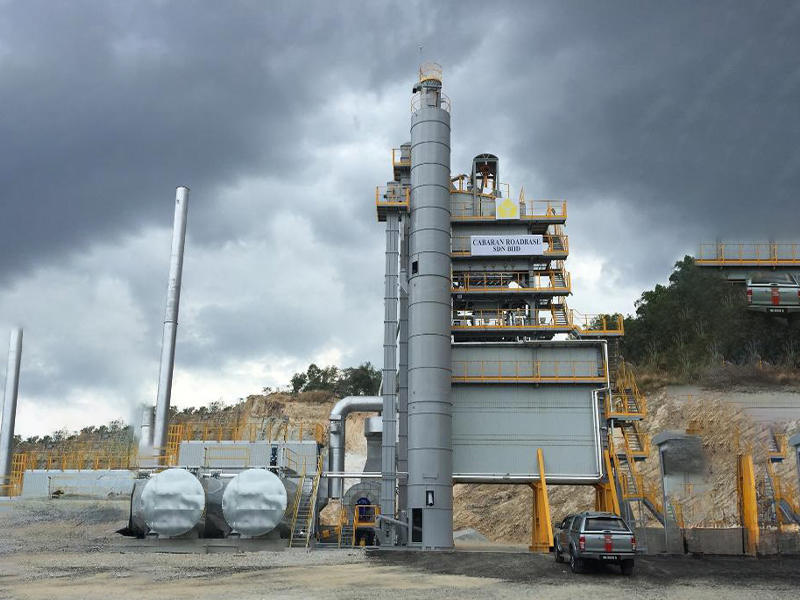
Let me dive into a specific failure I witnessed—it’s more instructive than any success. A large ready-mix producer in Indonesia invested in a high-end batching plant touting zero water discharge. The system was designed to recycle all washout water and stormwater runoff. Technically, it worked. But the recycled water’s fine silt content, despite filtering, gradually altered the concrete’s set time and early strength. For precision structural work, this was unacceptable. They ended up using the recycled water only for non-critical applications and had to supplement with fresh water, undermining the system’s core purpose.
This experience makes me cautious about any absolute claims. When discussing Simem’s water management, I now ask not just about the recycling rate, but about the data on how recycled water quality affects different mix designs (M25 vs. M40, for instance). True innovation would be a system that not only recycles but also actively treats and adjusts the water quality to a consistent standard suitable for high-grade concrete. I haven’t seen that fully realized yet from any manufacturer. It’s the next frontier.
So, Is It Sustainable Innovation?
Judging by the hands-on details, Simem’s approach to the concrete batching plant shows a clear intent to move beyond greenwashing. Their engineering choices in precision batching, energy logic, and system design show an awareness of on-the-ground operational and environmental costs. Partnering with established manufacturers like Taian Yueshou provides the manufacturing heft to build durability and implement responsible production practices, which is a core, if hidden, part of the sustainability equation.
But innovation implies a leap. Here, I see more evolution. The real innovation might not be Simem’s alone, but how their systems are leveraged by forward-thinking contractors. The plant provides the tools—efficient motors, smart controls, recycling loops. The sustainability outcome is co-created by the operator’s discipline, the maintenance team’s diligence, and the project’s willingness to measure what matters beyond the upfront price.
Ultimately, the most sustainable plant is the one that produces consistent, high-quality concrete with minimal waste and energy over a very long life. Simem’s designs are certainly aligned with that goal. Calling it a definitive sustainable revolution might be a stretch, but it’s a serious, competent step in that direction—which, in this heavy industry, is often what genuine progress looks like. The proof, as always, will be in the performance data collected from sites five or ten years from now, not in the marketing specs today.